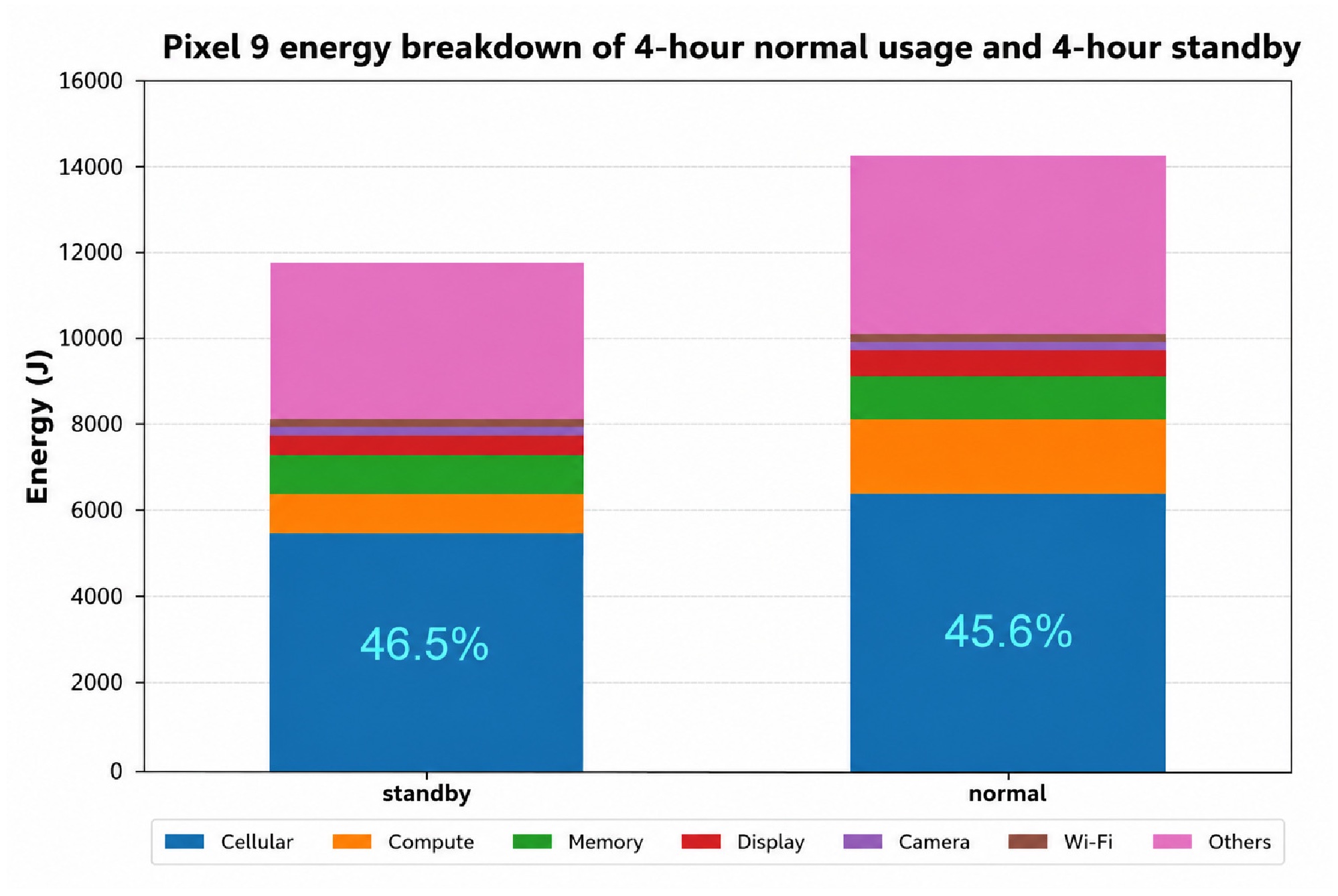
On a modern smartphone, the cellular subsystem is one of the largest energy consumers: on a Google Pixel 9, cellular communication accounts for roughly 46% of total device energy during both normal usage and standby, more than compute, memory, or display. That power is jointly determined by application-layer IP traffic and by the gNB's configuration and scheduling decisions. Studying this relationship on real hardware is challenging because the application server, radio activity, and UE are distributed across separate systems, making them difficult to instrument and control within a single experimental environment. As a result, most studies rely on analytical models such as 3GPP TR 38.840, which assigns relative power units to slot-level activities but is not a calibrated replica of any commercial modem.
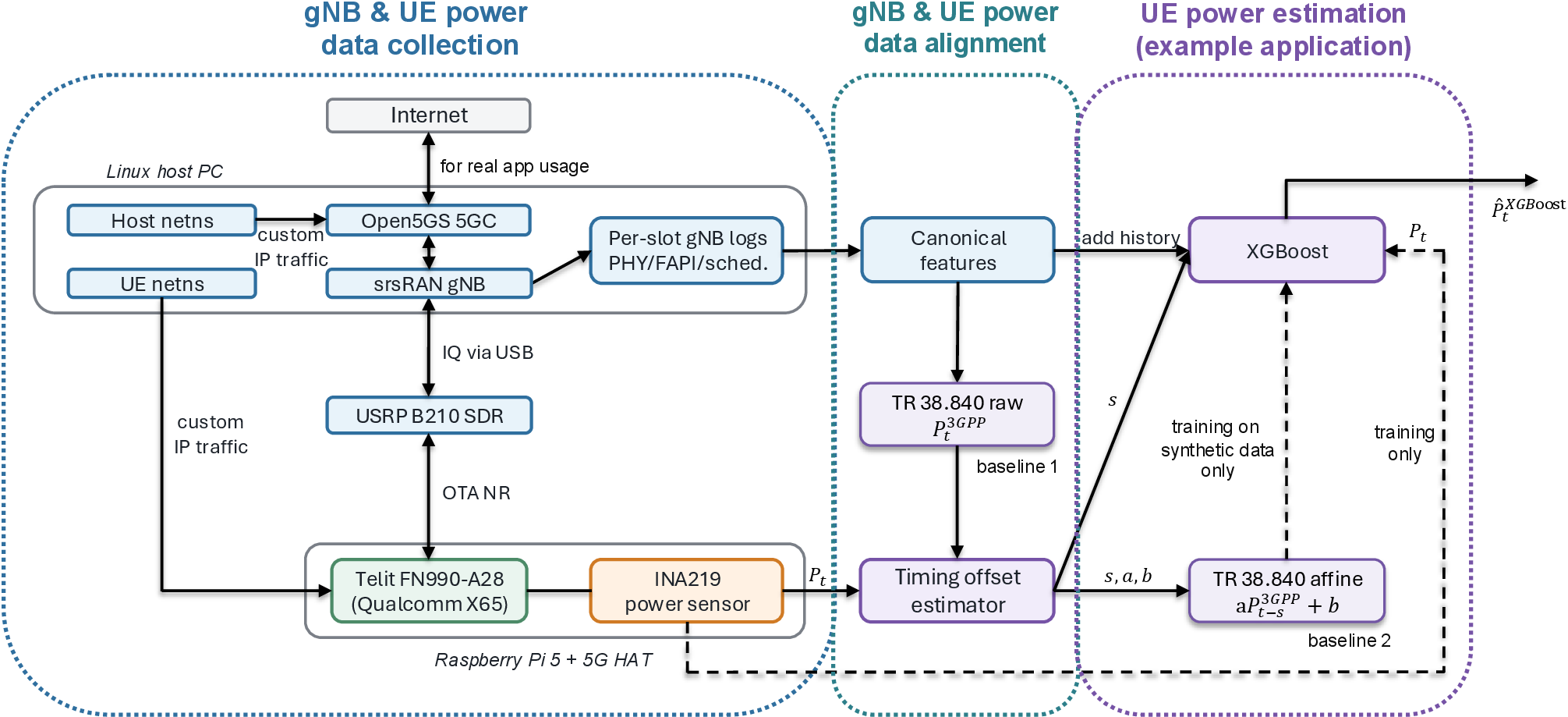
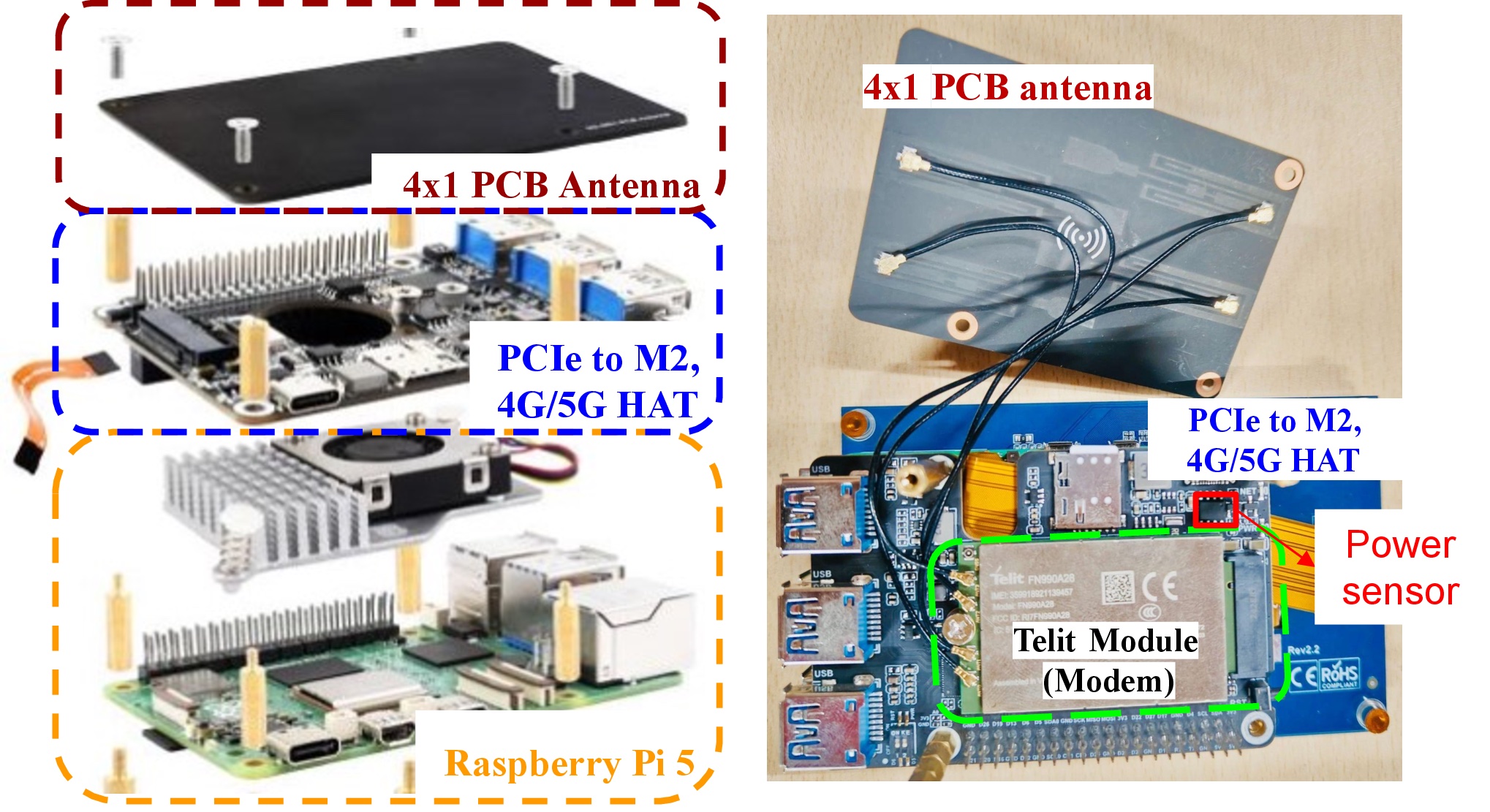
We present a configurable 5G testbed that integrates these components into a unified experimental platform. A Linux host runs an Open5GS core and an srsRAN gNB serving a private 5G standalone cell over a USRP B210 (band n41, 20 MHz, 30 kHz SCS). The UE is a commercial Telit FN990A28 data card built around Qualcomm's Snapdragon X65 modem, mounted on a PCIe-to-M.2 HAT on a Raspberry Pi 5, with an INA219 current sensor measuring the modem supply. The platform drives either real Internet applications or arbitrary scripted traffic over the same radio path, and links per-slot gNB PHY/FAPI/scheduler activity to hardware-measured UE power using an efficient TR 38.840-based timing-alignment method.
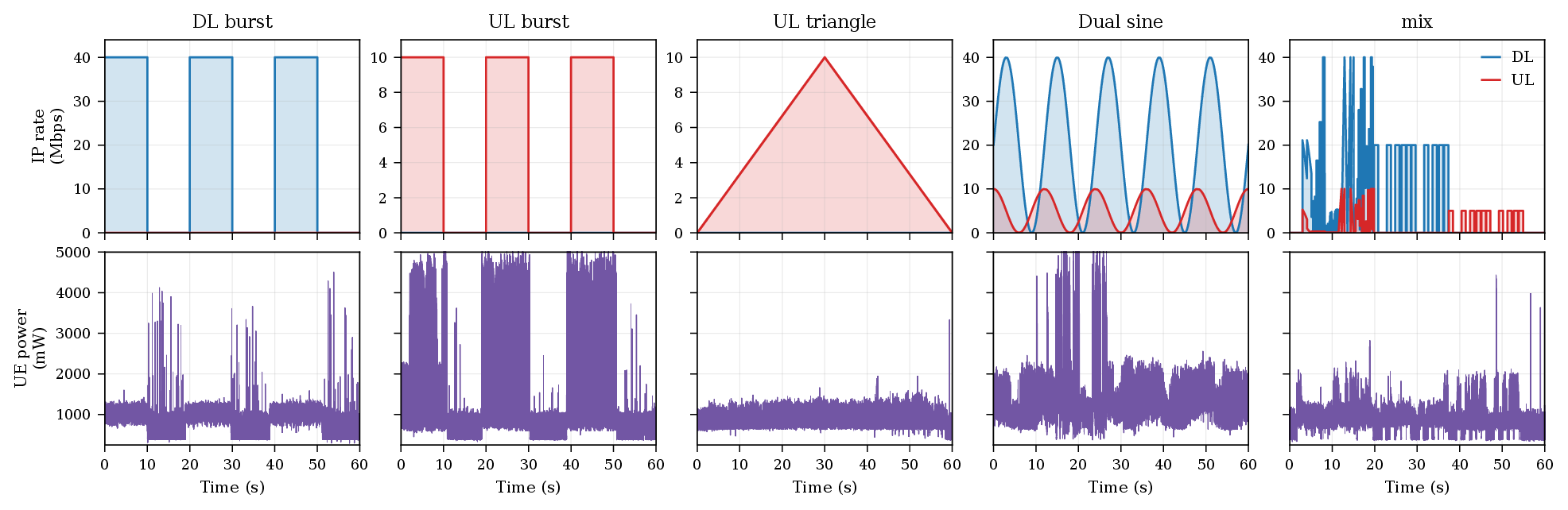
A programmable bidirectional traffic generator lets us script downlink and uplink rate schedules down to 1 ms resolution. Even simple probes reveal that UE energy is not determined by average traffic volume alone: for example, an uplink burst train and an uplink triangle deliver the same aggregate throughput over 60 s but consume substantially different energy, because distinct traffic patterns activate different combinations of uplink transmission, downlink reception, control monitoring, retransmissions, and modem state transitions.
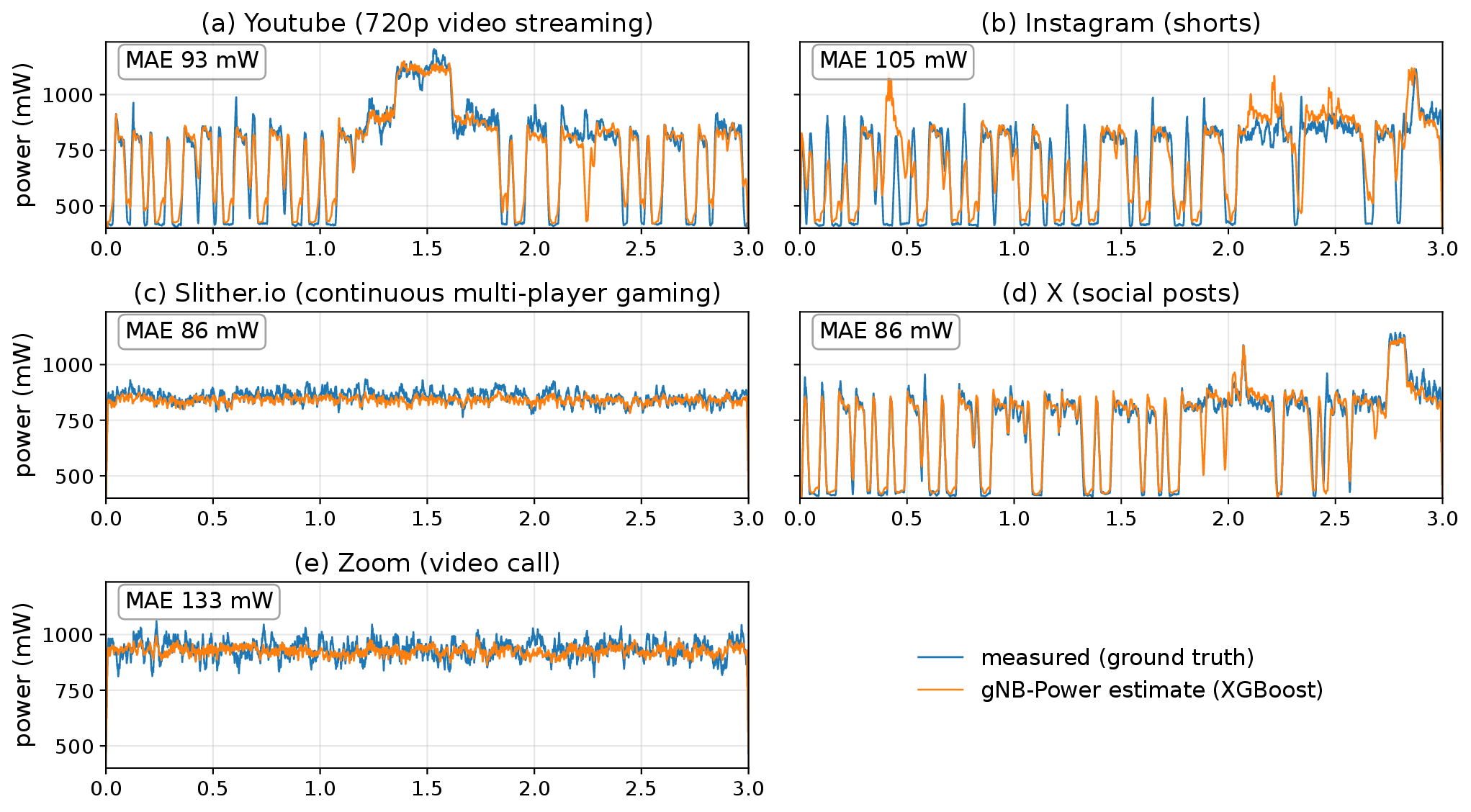
As one demonstration of what the resulting dataset enables, we build gNB-Power, an XGBoost estimator that predicts commercial UE power from causal gNB-observable features alone. Across five real applications (YouTube, Instagram, slither.io, X, and Zoom), gNB-Power predicts instantaneous UE power to 86–133 mW MAE, roughly halving the error of the standardized TR 38.840 baseline, with a mean interval-energy error of 1.1% compared with 16.0% for raw TR 38.840. Trained only on scripted synthetic traffic, it still transfers to unseen real applications (150 mW MAE, 4.3% energy error), outperforming even a TR 38.840 calibration fit directly on the target power. The platform offers a flexible measurement primitive for UE power-saving studies, enabling controlled investigation of how both application-layer and network-side decisions affect UE energy consumption.
|
|